
How to Win a Mold Case: Proving Responsibility, Causation and Damages
Contents
Last reviewed: October 17, 2026. This article is general information, not legal advice. Landlord-tenant, property and injury law differ by state and city, so check your local rules or speak with a local attorney.
Finding mold in your home is stressful, especially if you or your family have been feeling unwell and the landlord, seller or builder isn't helping. If you're thinking about a legal claim, it helps to know what courts actually look for, so you can start gathering the right evidence now.
Short answer: how to win a mold case depends on proving three things: that someone else was legally responsible for the conditions (for example a landlord who must keep a rental habitable), that they knew or should have known about the moisture or mold and didn't fix it in a reasonable time, and that the mold caused your losses. Health claims are the hardest to prove and usually need a doctor's opinion.
The legal theories behind mold claims
Which theory fits depends on who you are and who you're claiming against.
- Tenants vs. landlords: breach of the implied warranty of habitability, violation of local housing codes, breach of the lease, and negligence. Some states and cities also have specific mold or dampness rules.
- Buyers vs. sellers: failure to disclose known mold or water damage, where state disclosure laws apply, or misrepresentation.
- Owners vs. builders or contractors: defective construction or repairs that let water in.
- Homeowners vs. insurers: a dispute over whether the policy covers mold, which often depends on whether it came from a covered event such as a sudden pipe burst.
- Workers: mold-related illness from a workplace is usually a workers' compensation matter rather than a lawsuit against the employer.
What you need to prove
1. Responsibility (a duty)
Show who was responsible for the condition: a landlord's duty to maintain the property, a seller's duty to disclose, or a contractor's duty to do the work properly. Our guide to what a plaintiff must establish in a negligence case explains duty, breach, causation and damages.
2. Notice and failure to act
Courts look closely at whether the other side knew or should have known about the leak or mold, and what they did about it. Written notice is powerful evidence: an email or letter with dates and photos, and a record of every follow-up.
3. Causation
This is where many cases are won or lost. You'll need to show that the moisture problem caused the mold, and that the mold caused your losses. The EPA explains that "Molds produce allergens (substances that can cause allergic reactions) and irritants", and that mold can trigger asthma attacks in people who are allergic to it. But a court needs evidence linking your symptoms to this exposure, which usually means medical records and a doctor's opinion.
4. Damages
Keep proof of every loss: repair and cleaning bills, ruined furniture and clothing, hotel or moving costs, medical bills, and time off work.
Building your evidence
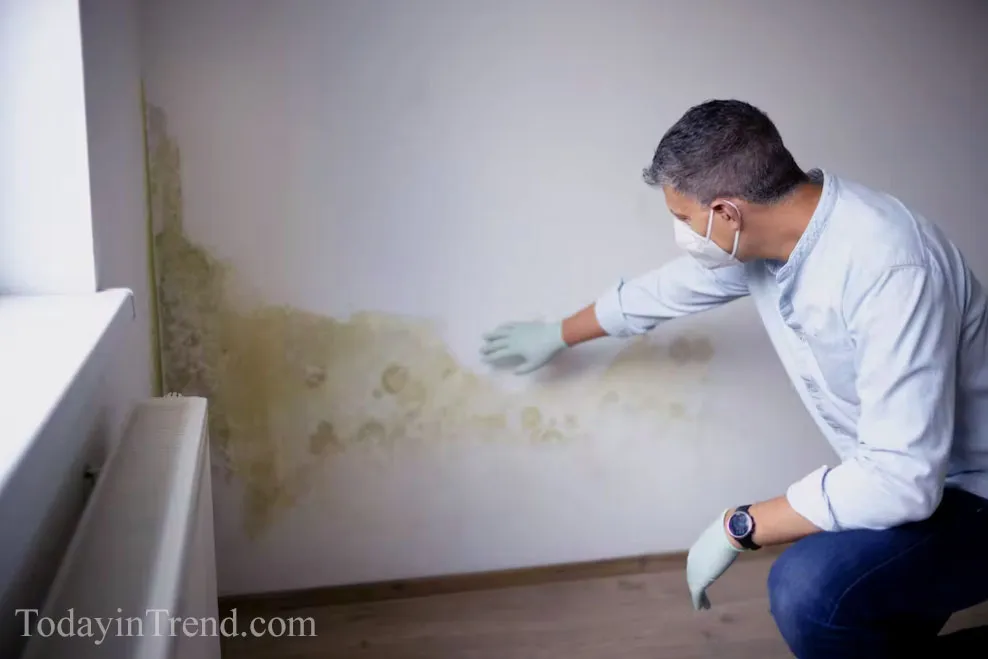
- Photograph and video the mold, leaks and water stains, with dates.
- Report it in writing to the landlord, property manager or seller, and keep copies.
- Request an inspection from your local code enforcement or health department where available. An official finding can be strong evidence.
- Get medical care if you have symptoms and tell your doctor about the mold exposure.
- Keep a log of symptoms, repair requests and responses.
- Don't destroy evidence: keep samples of damaged items or photograph them before throwing them out.
- Consider a professional assessment. The EPA notes there are no federal standards for airborne mold, so testing is mostly useful to find hidden moisture or show where mold came from, not to prove a legal violation.
Common mistakes
- Withholding rent without following your state's procedure, which can lead to eviction.
- Relying on verbal complaints only.
- Waiting too long and missing the statute of limitations.
- Claiming serious illness without medical support, which can damage your credibility.
- Cleaning everything before documenting it.
When to talk to a lawyer
If mold has caused health problems, serious property damage or forced you to move, a consultation with a local landlord-tenant or personal injury attorney is worth it. Many injury lawyers offer free consultations; see what percentage a lawyer gets in a settlement. If you are offered a settlement, read what makes a settlement offer reasonable.
Can I sue my landlord for mold?
Often, yes, if the mold made the home unfit to live in or the landlord failed to fix a known moisture problem. Tenants usually rely on the implied warranty of habitability, local housing codes, negligence, or the lease. California, for example, lists visible mold growth as a substandard housing condition in Health and Safety Code § 17920.3, with an exception for minor mold on surfaces that normally get wet.
Do I need a mold test to win?
Not always. The EPA says that in most cases, if visible mold growth is present, sampling is unnecessary, and that there are no federal standards for airborne mold levels. In a lawsuit, though, inspections, moisture readings and expert opinions are often used to show where the mold came from and how much there was.
What is the hardest part of a mold injury case?
Usually causation: proving that this mold caused your specific health problems, rather than something else. That normally needs medical records and a doctor's opinion. Property damage and repair costs are often easier to prove than health effects.
What can I recover in a mold case?
Depending on the claim and the state: repair or cleaning costs, damaged belongings, moving costs, rent reductions, medical expenses, lost wages and, in injury cases, pain and suffering. There are no standard payout amounts; it depends on the evidence and the law where you live.
Is there a deadline to file?
Yes. Each state has statutes of limitations, and they can differ for injury, property damage and contract claims. In California, for example, most personal injury claims must be filed within two years under Code of Civil Procedure § 335.1. Check your state's deadlines early.
Sources
- California Health and Safety Code § 17920.3 (substandard buildings, visible mold): FindLaw copy of the statute
- Implied warranty of habitability: Cornell LII Wex
- Negligence elements: Cornell LII Wex
- U.S. EPA, Mold and Health: epa.gov
- U.S. EPA, Mold Testing or Sampling: epa.gov
- California Code of Civil Procedure § 335.1 (two-year limit for personal injury): FindLaw copy of the statute

About Farrukh Shahzad
Farrukh Shahzad is the founder and researcher behind TodayinTrend. He is not a lawyer and does not give legal advice — he reads the statutes, court rules and official data, then explains what they actually say in plain English.
Leave a comment
Comments are reviewed before they appear. Please don't share private details about your case.