
Are Molotov Cocktails Legal?
Contents
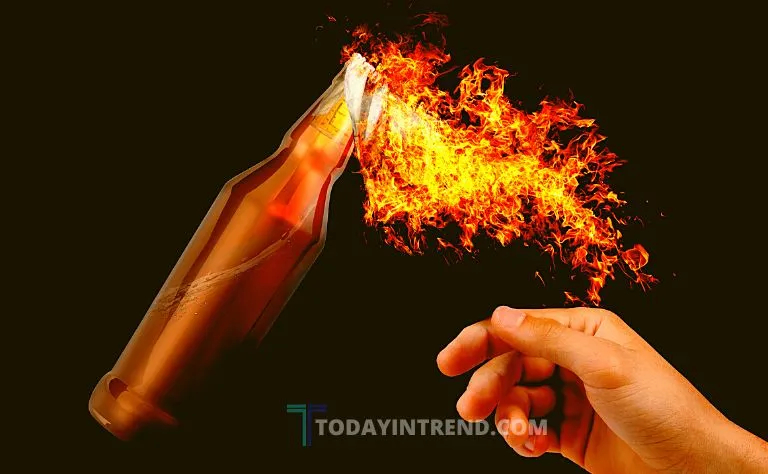
No — molotov cocktails are illegal. Under U.S. federal law they are classified as “destructive devices,” and making, possessing, or transferring one is a serious felony. Every state also prohibits them under its incendiary-device, arson, or weapons laws. This page explains the law only.
Federal law: a “destructive device” under the National Firearms Act
The National Firearms Act (NFA) defines a “destructive device” at 26 U.S.C. § 5845(f) to include any incendiary bomb, and federal courts have consistently held that a Molotov cocktail falls squarely within that definition. Because such a device cannot realistically be registered, having one is treated as possession of an unregistered destructive device.
Under 26 U.S.C. § 5861, it is a federal crime to make, possess, or transfer an unregistered destructive device. A conviction carries up to 10 years in federal prison and substantial fines (§ 5871). The government generally does not even have to prove an intent to use the device — the unregistered device itself is the offense. The Gun Control Act contains a parallel definition at 18 U.S.C. § 921(a)(4), and these laws are enforced by the ATF.
State law
Beyond federal law, every state criminalizes incendiary or destructive devices, usually as a felony. Florida, for example, treats making or possessing such a device as a second-degree felony (Fla. Stat. §§ 790.001, 790.161), punishable by up to 15 years. Depending on the circumstances, related charges can include arson, attempted arson, criminal mischief, or aggravated assault.
The bottom line
There is no lawful way for an ordinary person to make or possess a Molotov cocktail — it is a federal felony and a state crime, whether or not it is ever used. If you have questions about a specific situation or charge, consult a qualified criminal defense attorney.
Sources
- 26 U.S.C. § 5845(f) — National Firearms Act definition of “destructive device” (Cornell LII)
- 26 U.S.C. § 5861 — Prohibited acts (making/possessing an unregistered destructive device) (Cornell LII)
- ATF — National Firearms Act
- State laws also prohibit incendiary/destructive devices (for example, Fla. Stat. § 790.161); check your state’s code.
Last reviewed: August 2, 2026. This article is general information, not legal advice.

About Farrukh Shahzad
Farrukh Shahzad is the founder and researcher behind TodayinTrend. He is not a lawyer and does not give legal advice — he reads the statutes, court rules and official data, then explains what they actually say in plain English.
Leave a comment
Comments are reviewed before they appear. Please don't share private details about your case.